Case study
Hope Support
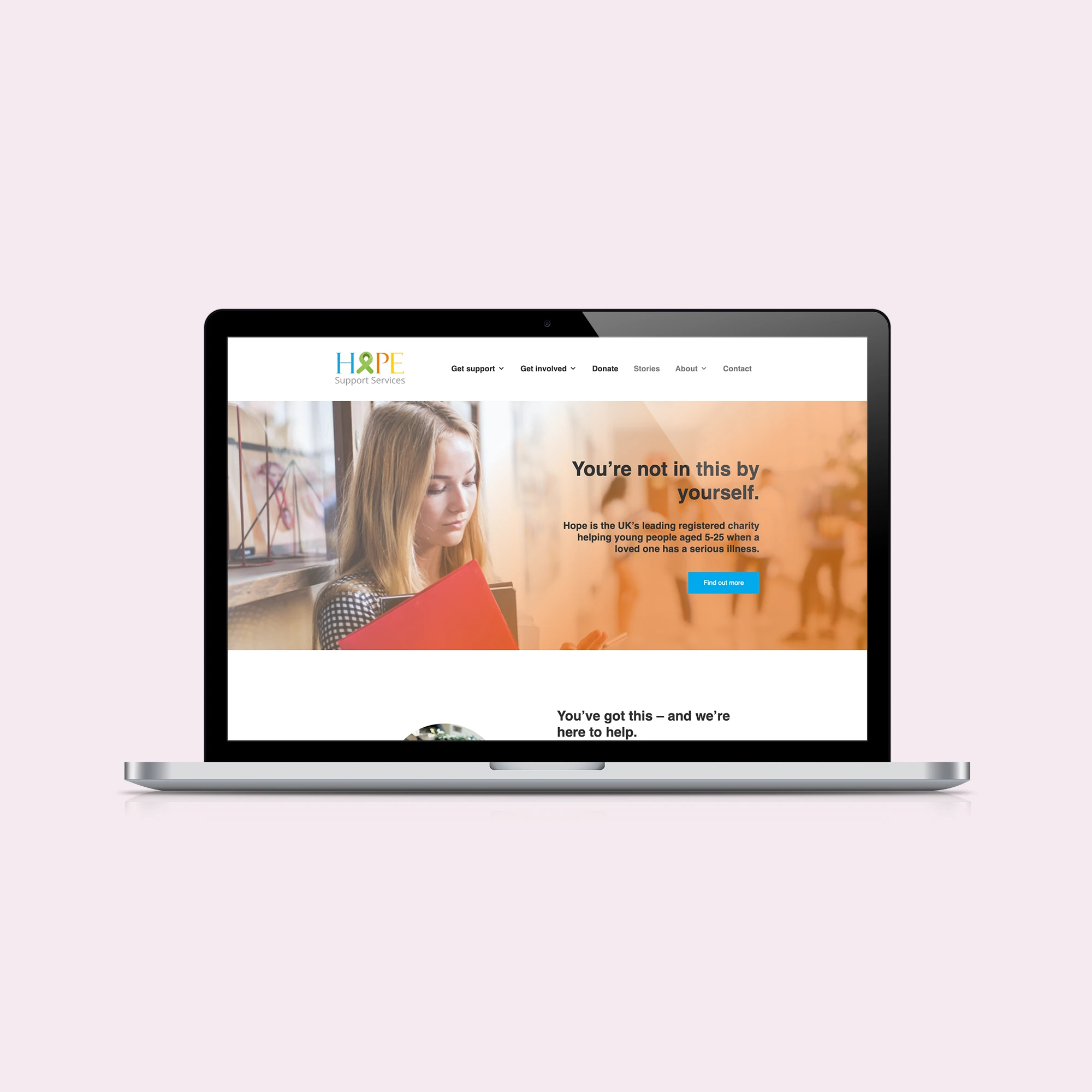
A UK charity providing support to children and young people whose parents have developed a serious or life-threatening illness. A small team, a heavy subject, and a website that needed to feel like a steady hand rather than a marketing brochure.
The brief
Hope Support's existing identity had been developed years earlier and never quite fit. Despite meaning well, the site was heavy with plugins, did not have very clear user journeys and simply didn't do justice to the fantastic volunteers and staff at the charity or their users.
The new site also had to do practical work: parents and young people needed to find what support was available in their area, referrers needed to send people to the right place, donors needed a clear path to give without that path taking over the site.
What we did
- Worked through a partial rebrand with the team: sharpened the colour palette to allow for a more accessible experience, improved typography, and together we landed on something quieter and more grown-up than the previous identity, with room for the warmth the team genuinely has.
- Restructured the site around four audiences: young people, parents and carers, referrers, and donors. Each has a clear front door and a clear set of next steps.
- Restructured the help-finding journey end-to-end with the charity's services team. We surfaced the guides to getting help far earlier in the user journey and gave the site a more welcoming feel.
- We did a lot of back-end work to automate many of the paperwork processes that the charity was relying on, helping them to spend their time supporting families and young people rather than converting PDFs and Word Docs into meaningful data.
- Set up the site so that the small team can maintain it themselves and content edits don't require a developer in the loop.
Outcome
The launch was deliberately quiet. The charity reports that more young people are completing the help-finding journey on the new site than on the old one, and the team's own confidence in the brand is, if anything, the more meaningful change. The site does what a small charity's site should do: it gets out of the way of the work.
The kindest thing a website can do for someone in crisis is be quiet and clear.